

|
|
 Reindeer |
Reindeer(Mammal) |
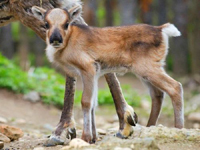 Reindeer Baby |
Reindeer HabitsThe reindeer inhabits the bleak arctic plain or tundra, and the surrounding forest and mountain areas. Within this harsh and freezing-cold environment, reindeer live together in herds.The smallest herd may contain 20 animals, while the largest may contain thousands. The herd is almost constantly on the move.
The reinder is a valuable and important animal to the nomadic tribes of the arctic regions, especially the Lapps.It is the only deer that can be domesticated. It provides butter, meat, cheese, clothing, and transportation. Its antlers and bones are used to make tools and utensils, and the tough sinews in its legs are used to make thread. The reindeer's range has decreased dramatically due to extensive hunting and the destruction of its natural habitat by man. The building of hydro electric power plants has caused rivers to be diverted and large dams to be constructed in Canada and Siberia. The alteration of the natural landscape obstructs reindeer migration routes and causes thousands to drown. |
Reindeer CommunicationReindeer have many means of communication, and vocalizations are an important part of their repertory. Reindeer vocalizations are notable for their diversity, ranging from doglike alarm barks to high-pitched, whistlelike mating bugles.
The occasions for reindeer conversations vary, and they include social contact, interactions between mother and young, encounters with predators and especially the complex negotiations involved in mating.
Their communication also involves foot stomping, tail flagging, head bobbing, ear twitching, hoof pawing and nose licking; lunges, charges, chases, pokes and antler thrusts; and aggressive sounds described as grunt-snorts and grunt-snort-wheezes. There are also alarm snorts and bawls and less disturbing sounds, like social-contact grunts between does.
Deer have a variety of glands that produce strongly scented hormonal signals. The vomeronasal organ detects hormones and other chemicals in urine with a characteristic intake of breath called the flehmen sniff. |
Reindeer BreedingThe reindeer mates sometime between August and November, depending on location, but mostly in October. This is known as the rutting season, and the male becomes very aggressive, fighting with other males as he competes to win control of a harem of 5 to 15 females.
As the time approaches to give birth, the female leaves the herd and chooses a secluded spot. She usually returns to the same spot each year to calve, or bear young. The calf is born between late May and early June, when the herd is at the summer grazing grounds. It weighs 11 - 20 pounds and can stand within minutes after being born. It suckles until it is five to six months old.Unlike many baby deer, the reindeer fawn's coat is not marked with camouflaging spots. Becasue they are born in early summer, the calves have enough time to feed and grow strong before the Fall migration, when predators are most likely to attack.The calf's antlers begin to grow when the animal is a year old. |
Reindeer Food & FeedingThe reindeer is a plant eater and eats a wide variety of vegetation. The mainstay of its diet are the lichens and tough grass that grows on the tundra. In the spring, the reindeer will graze the newly sprouted shoots of grass and shrubs. The green leaves of birches and willows are eaten at the summer grazing grounds.During the harsh winter months, the reindeer has a difficult time finding enough to eat. It will dig holes in the snow several feet deep to get to the lichens and moss underneath. At the same time, it feeds on the twigs of any shrubs it finds under or above the snow. |
Reindeer Key Facts |
| Size |
| Height: Length: 48-86 in |
| Weight: 200-600 lbs |
| Breeding |
| Sexual maturity: 29-41 months |
| Mating: August to November |
| Gestation: About 8 months |
| Number of young: Usually 1 |
| Lifestyle |
| Habit: Sociable.Herds may number several thousand |
| Diet: Lichens, mosses,grasses |
| Lifespan: 12-15 years |
DID YOU KNOW?
|
CAN'T FIND WHAT YOU'RE LOOKING FOR? CLICK HERE!!!